
WHAT IS ORDINATION?
DEEPEN YOUR GOING FOR REFUGE
Ordination is making a definite, life-changing commitment to the Buddha, Dharma and Sangha, within the context of the Triratna Buddhist Order, founded by Urgyen Sangharakshita. It consists of two distinct ceremonies called the Private Ordination and the Public Ordination which are usually held within a number of days of each other. Both have this same intention of making a commitment to the Three Jewels.
Readiness for ordination cannot be reduced to a set of external criteria. Nonetheless, there is an essential set of elements that are central to ordination training. Our ordination ceremony has three main stages, expressing three important aspects of spiritual practice:
- Going For Refuge
- The Ten Precepts
- The Four Acceptance Verses
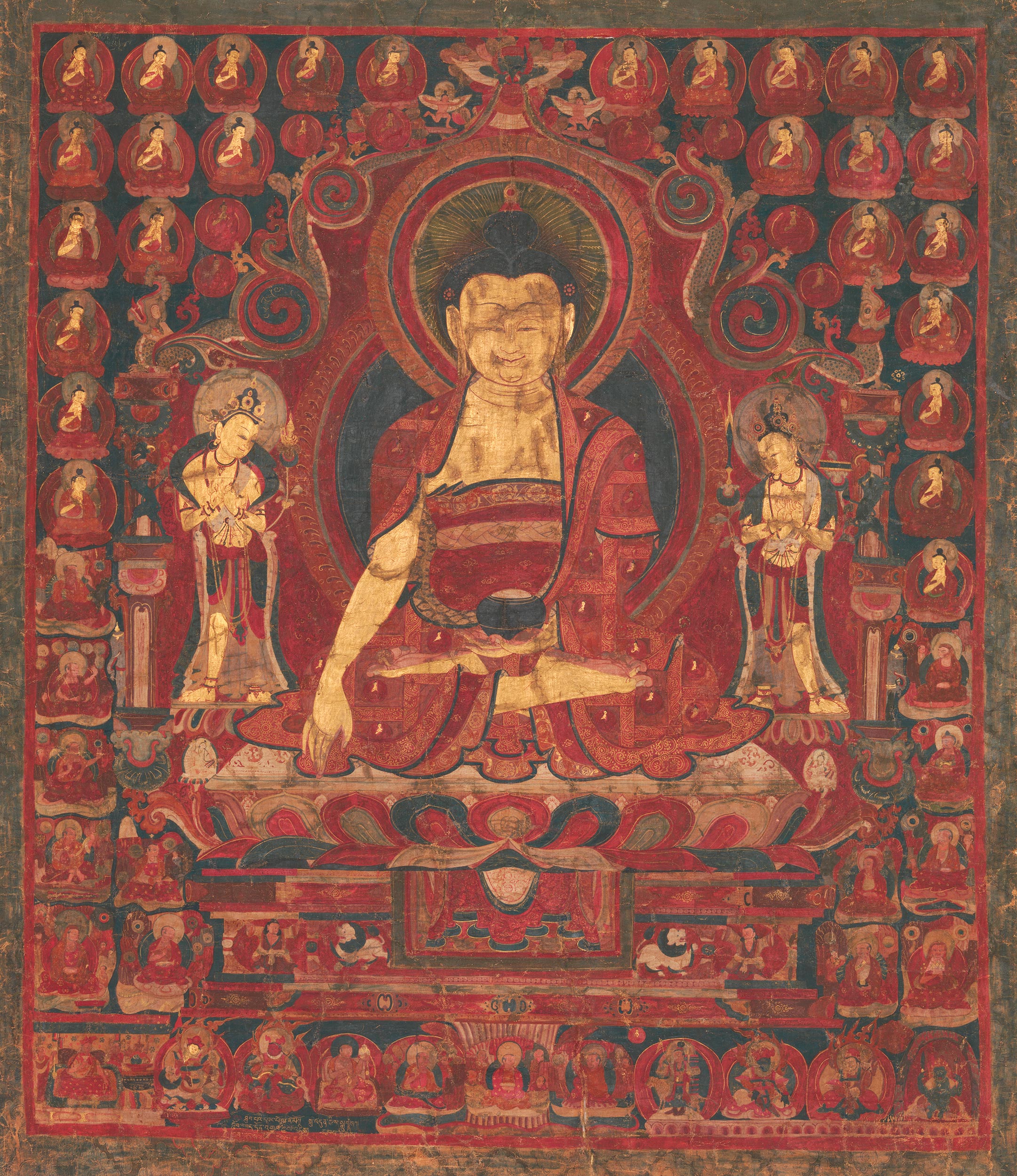
Going for Refuge
Ordination into the Triratna Buddhist Order is essentially in Going for Refuge to the Buddha, Dharma, and Sangha. The ordination ceremony consists of witnessing your “Effective Going for Refuge” by senior members of the Order. Your entire ordination training will be orientated towards deepening your Going for Refuge to the point where Order Members can say it is “Effective.”
Much could be said about the term “Effective Going for Refuge.” Put simply, it means that you are Going for Refuge to the Buddha, Dharma, and Sangha, in all aspects of your life. We also want to be as sure as we can that your Going for Refuge will be sustained for the rest of your life. Someone training for ordination will be dedicated to understanding the nature of Going for Refuge and living it out in their lives as fully as possible.
The Ten Precepts
One of the most important formulations of the Buddhist path is the Threefold Path of Ethics, Meditation and Wisdom. The Ten Precepts are the core of the path of Ethics.
The importance of ethics in the spiritual life is stressed throughout the training for ordination. At the time of ordination you will take the Ten Dharmachari Precepts. These precepts are what Sangharakshita has termed “the Mula Pratimoksha” – the basic ethical code. These Ten Precepts are what a Dharmachari lives by. They represent the living out of Going for Refuge in all aspects of your life. Your training in ethics will consist in developing an understanding of the Ten Precepts and imbibing their spirit. Practicing ethics also involves such things as the cultivation of mindfulness of body, speech and mind, as well as such things as confession of faults and the making of resolutions.
A true ethical life grows from an ethical sensibility, and this is cultivated through developing sensitivity to oneself and others by reflection and open communication. Training in Buddhist ethics has a contemplative and meditative dimension. We need to know our mind and our mental states.
Panatipata veramani sikkhapadam samadiyami
Adinnadana veramani sikkhapadam samadiyami
Kamesu micchachara veramani sikkhapadam samadiyami
Musavada veramani sikkhapadam samadiyami
Pharusavacaya veramani sikkhapadam samadiyami
Samphappalapa veramani sikkhapadam samadiyami
Pisunavacaya veramani sikkhapadam samadiyami
Abhijjhaya veramani sikkhapadam samadiyami
Byapada veramani sikkhapadam samadiyami
Micchaditthiya veramani sikkhapadam samadiyami
With deeds of loving kindness, I purify my body.
With openhanded generosity, I purify my body.
With stillness, simplicity and contentment, I purify my body.
With truthful communication, I purify my speech.
With words kindly and gracious, I purify my speech.
With utterance helpful and harmonious, I purify my speech.
Abandoning covetousness for tranquility, I purify my mind.
Changing hatred into compassion, I purify my mind.
Transforming ignorance into wisdom, I purify my mind.

The Four Acceptance Verses
The third element of the ordination ceremony involves the Four Acceptances.
For the attainment of Enlightenment, I accept this ordination
For the benefit of all beings, I accept this ordination
With loyalty to my teachers, I accept this ordination
In harmony with friends and brethren, I accept this ordination
These four verses can inspire us with the profound purpose and meaning of ordination and the altruistic and collective nature of Buddhist practice.